
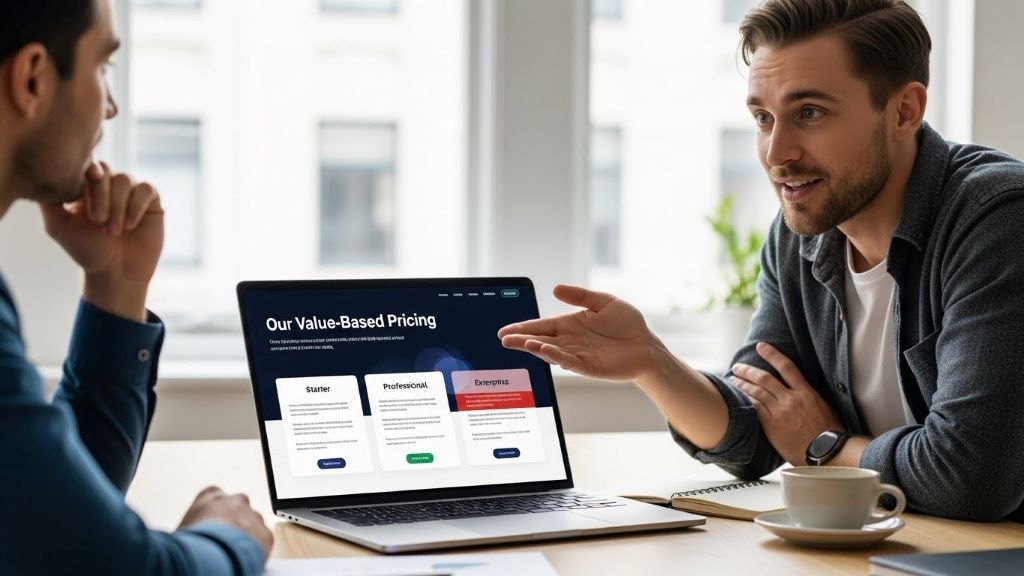
Setting the right price for your web design services can make or break your business. However, pricing is not just about numbers. It involves understanding how clients think and what influences their buying decisions. By using smart pricing psychology techniques, you can increase conversions, attract better clients, and grow your revenue.
Understanding the Psychology Behind Pricing Decisions
Clients rarely make purchasing decisions based purely on logic. Emotions, perceptions, and mental shortcuts play a huge role in how people evaluate prices. Therefore, understanding these psychological triggers helps you present your services in the most appealing way possible.
When potential clients look at your pricing, they compare it against their expectations and past experiences. Additionally, they consider the perceived value of what they will receive. Your job is to frame your prices so clients see the true worth of your work.
The Power of Anchoring in Web Design Pricing
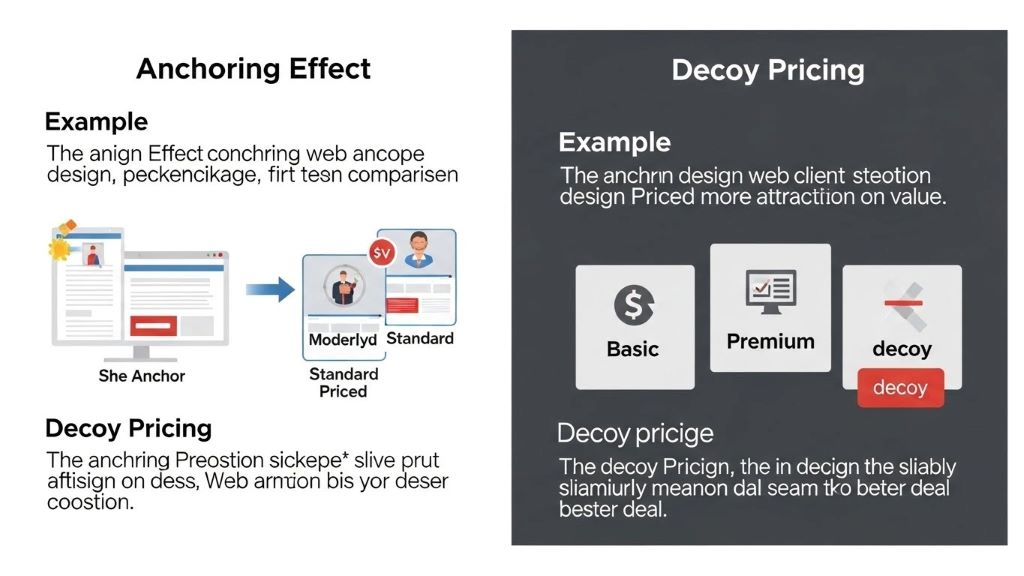
Anchoring is one of the most effective pricing psychology techniques available. This strategy involves presenting a high-priced option first to make other options seem more reasonable. For example, if you show a premium package at $10,000 before revealing your standard package at $5,000, the latter suddenly appears more affordable.
Many successful web design businesses use this technique by creating three-tier pricing structures. The highest tier serves as an anchor, making the middle option look like the best value. Consequently, most clients choose the middle package, which often has the best profit margins.
Moreover, anchoring works because our brains naturally use the first piece of information as a reference point. Everything that follows gets compared to that initial number. Therefore, always present your pricing options strategically.
Creating Perceived Value Through Price Presentation
How you present your prices matters just as much as the prices themselves. Instead of listing prices as single numbers, break them down to show what clients receive for their investment. This approach helps justify higher prices and reduces sticker shock.
For instance, rather than saying “Website Design: $8,000,” you could present it as “Complete Website Package: Custom design, mobile optimization, SEO setup, content management system, security features, and ongoing support for 30 days.” This detailed breakdown helps clients understand exactly what they are paying for.
Furthermore, using price framing can significantly impact perceived value. Presenting a price as “$200 per month” often feels more manageable than “$2,400 per year,” even though the total cost is identical. This technique works particularly well for maintenance packages and retainer agreements.
The Decoy Effect in Package Pricing
The decoy effect is a powerful tool that influences decision-making by introducing a third option. This technique involves creating a pricing structure where one option makes another look significantly more attractive. Research from behavioral economics shows this strategy consistently increases sales of targeted packages.
Here is how it works in practice. Imagine you offer two packages: Basic at $3,000 and Premium at $7,000. Many clients might hesitate at the Premium price. However, if you introduce a Professional package at $6,500 that offers only slightly fewer features than Premium, suddenly the Premium package looks like a much better deal. Consequently, more clients choose the higher-priced option.
This technique guides clients toward the choice you want them to make without being pushy. Additionally, it gives clients the feeling they are making a smart decision by choosing the best value option.
Using Odd-Even Pricing Strategies
The difference between $5,000 and $4,997 may seem negligible, but pricing psychology shows these small changes affect perception. Odd pricing (ending in 9, 7, or 5) tends to signal better value and attracts price-conscious buyers. Meanwhile, even pricing (ending in 0) conveys quality and premium positioning.
For web design services, consider your target market when choosing between odd and even pricing. If you want to attract budget-conscious small businesses, prices like $2,995 or $4,997 work well. However, if you target high-end clients who prioritize quality over cost, round numbers like $5,000 or $10,000 project more prestige.
Therefore, align your pricing format with your brand positioning. Consistency across all your pricing reinforces your market position and helps attract the right clients.
Leveraging Social Proof and Scarcity
Humans are social creatures who look to others when making decisions. This tendency makes social proof an essential element of pricing psychology. Displaying testimonials, case studies, and client logos near your pricing information builds trust and justifies your rates.
According to research from Nielsen, 92 percent of consumers trust recommendations from others over brand advertising. Therefore, prominently featuring client success stories alongside your pricing can dramatically increase conversion rates.
Scarcity is another powerful motivator that affects purchasing decisions. Limited-time offers, such as “Only 3 spots available this month” or “Early bird pricing ends Friday,” create urgency. However, use this technique authentically. False scarcity damages trust and hurts your reputation in the long run.
The Impact of Payment Options on Conversion
Offering flexible payment options removes barriers that prevent clients from saying yes. Many potential clients want your services but struggle with paying a large sum upfront. By providing payment plans, you make your services accessible to more businesses.
For example, presenting a $6,000 project as “Three monthly payments of $2,000” reduces the psychological burden of the investment. Additionally, this approach helps clients manage their cash flow better, making them more likely to proceed with the project.
Furthermore, clearly stating your payment terms upfront builds trust. Transparency about deposits, milestone payments, and final payments prevents misunderstandings and sets professional expectations from the start.
Price Positioning Against Competitors
Your pricing does not exist in a vacuum. Clients will compare your rates with other web designers, so understanding competitive positioning is crucial. However, competing on price alone is a race to the bottom that devalues your expertise.
Instead, focus on differentiating your services through unique value propositions. Maybe you specialize in e-commerce sites, offer exceptional post-launch support, or have expertise in specific industries. These differentiators justify premium pricing and attract clients who value expertise over low cost.
Moreover, avoid being the cheapest option in your market. Low prices often signal low quality in service industries. Position yourself in the middle to upper range of your market, depending on your experience and the unique value you provide.
Using Contrast Pricing to Highlight Value
Contrast pricing shows clients what they save or gain by choosing your services. This technique makes your value proposition tangible and easier to understand. For instance, you might compare the cost of hiring a full-time designer versus working with your agency.
You could present it like this: “Hiring a full-time designer costs approximately $75,000 annually plus benefits. Our comprehensive web design and maintenance package provides expert service for just $15,000 per year.” This comparison immediately demonstrates the financial advantage of your services.
Additionally, showing the potential return on investment helps clients see beyond the immediate cost. If your website design could help a client generate an additional $50,000 in revenue annually, a $10,000 investment becomes much easier to justify.
The Role of Confidence in Pricing Presentations
How you present your prices reflects your confidence in your value. Hesitation, excessive discounting, or apologetic language undermines your pricing and makes clients question whether you are worth the investment. Therefore, present your rates clearly and confidently without unnecessary justification.
Practice discussing your pricing until it feels natural. When a client asks about cost, respond with clarity and assurance. For example, “Our comprehensive website design package starts at $8,000, which includes everything you need to launch successfully and attract customers online.”
Furthermore, resist the urge to immediately offer discounts when clients express concern about price. Instead, ask questions to understand their budget constraints and explore alternative solutions that maintain your value while addressing their needs.
Implementing Tiered Pricing Structures
Tiered pricing gives clients options while guiding them toward the package that best fits their needs and your profit goals. This structure works because it accommodates different budget levels and provides a clear upgrade path.
When creating tiers, ensure each level offers distinct value. The basic tier should cover essentials, the middle tier should include popular features, and the premium tier should provide comprehensive solutions. Additionally, name your tiers strategically. Names like “Startup,” “Professional,” and “Enterprise” convey value better than “Basic,” “Standard,” and “Premium.”
Moreover, clearly differentiate what each tier includes. Clients should immediately understand what they gain by moving up to the next level. This transparency helps them self-select the right option and reduces back-and-forth negotiations.
Conclusion
Mastering pricing psychology techniques transforms how clients perceive and respond to your web design services. By understanding anchoring, the decoy effect, strategic price presentation, and the power of social proof, you can increase conversions without lowering your rates. Additionally, offering flexible payment options and positioning yourself confidently in the market attracts better clients who value quality.
Remember that effective pricing combines rational strategy with emotional appeal. Your prices should reflect your expertise, cover your costs, and generate healthy profits. However, how you present those prices determines whether potential clients see them as investments or expenses. Therefore, implement these psychology-based techniques consistently, test what works for your specific market, and adjust your approach based on real results. With the right pricing psychology strategies, you can build a more profitable web design business while serving clients who appreciate and respect your value.
Frequently Asked Questions
What is the best pricing structure for a web design business?
Tiered pricing structures work best for most web design businesses because they accommodate different client budgets while guiding decisions toward profitable packages. Additionally, offering three distinct tiers with clear value differences helps clients self-select the option that fits their needs.
How do I justify premium pricing to potential clients?
Focus on the value and results you deliver rather than the hours you work. Show case studies, explain your unique expertise, and demonstrate the return on investment clients can expect. Moreover, confident presentation of your pricing without apologizing reinforces your value.
Should I display pricing on my website or require consultation first?
This depends on your business model and target market. Displaying starting prices or price ranges builds transparency and pre-qualifies leads. However, complex custom projects may benefit from consultation-based pricing. Consider testing both approaches to see what converts better.
How often should I review and adjust my web design pricing?
Review your pricing at least annually or whenever your costs, expertise level, or market positioning changes significantly. Additionally, track your conversion rates and profitability to identify when adjustments are needed. Successful businesses evolve their pricing as they gain experience and reputation.
What should I do when clients say my prices are too high?
First, ask questions to understand their budget and priorities rather than immediately discounting. Then, explore whether a smaller scope or phased approach fits their budget while maintaining your rates. Remember that clients who only care about low prices often create more problems than they are worth. Focus on attracting clients who value quality and expertise.
Related Topics:
The 5 main differences between Social Media and Social Networking
Online Tools Entrepreneurs Like Anik Singal Use To Make Their Lives Easier




+ There are no comments
Add yours